Additional cost of zero-emission can be covered by subsidy
The construction sector is moving rapidly towards cleaner, quieter and fully zero-emission worksites. Public clients, contractors and equipment suppliers are all facing the same challenge: how to keep construction projects running reliably, while reducing emissions from diesel equipment, generators and site logistics.
In the Netherlands, this transition is shaped by the Schoon en Emissieloos Bouwen Convenant, commonly referred to as the SEB Convenant. The agreement sets a clear direction for cleaner construction, with increasing requirements for zero-emission construction equipment, mobile power supply and supporting infrastructure.
For contractors and public clients, this is no longer only a sustainability ambition. It is becoming a practical procurement requirement.
What the SEB Convenant means for construction projects?
The SEB Convenant supports the transition towards construction sites with lower emissions of CO₂, nitrogen oxides and particulate matter. It applies to construction, maintenance and demolition projects where mobile construction equipment, vehicles, vessels or stationary equipment are used.
This is especially relevant for infrastructure and civil engineering projects, such as:
- road construction and road maintenance;
- bridges, viaducts, tunnels and underpasses;
- quay walls, waterways and dredging-related works;
- railway and public transport infrastructure;
- site preparation and earthmoving works;
- utility infrastructure and energy projects;
- demolition works connected to infrastructure;
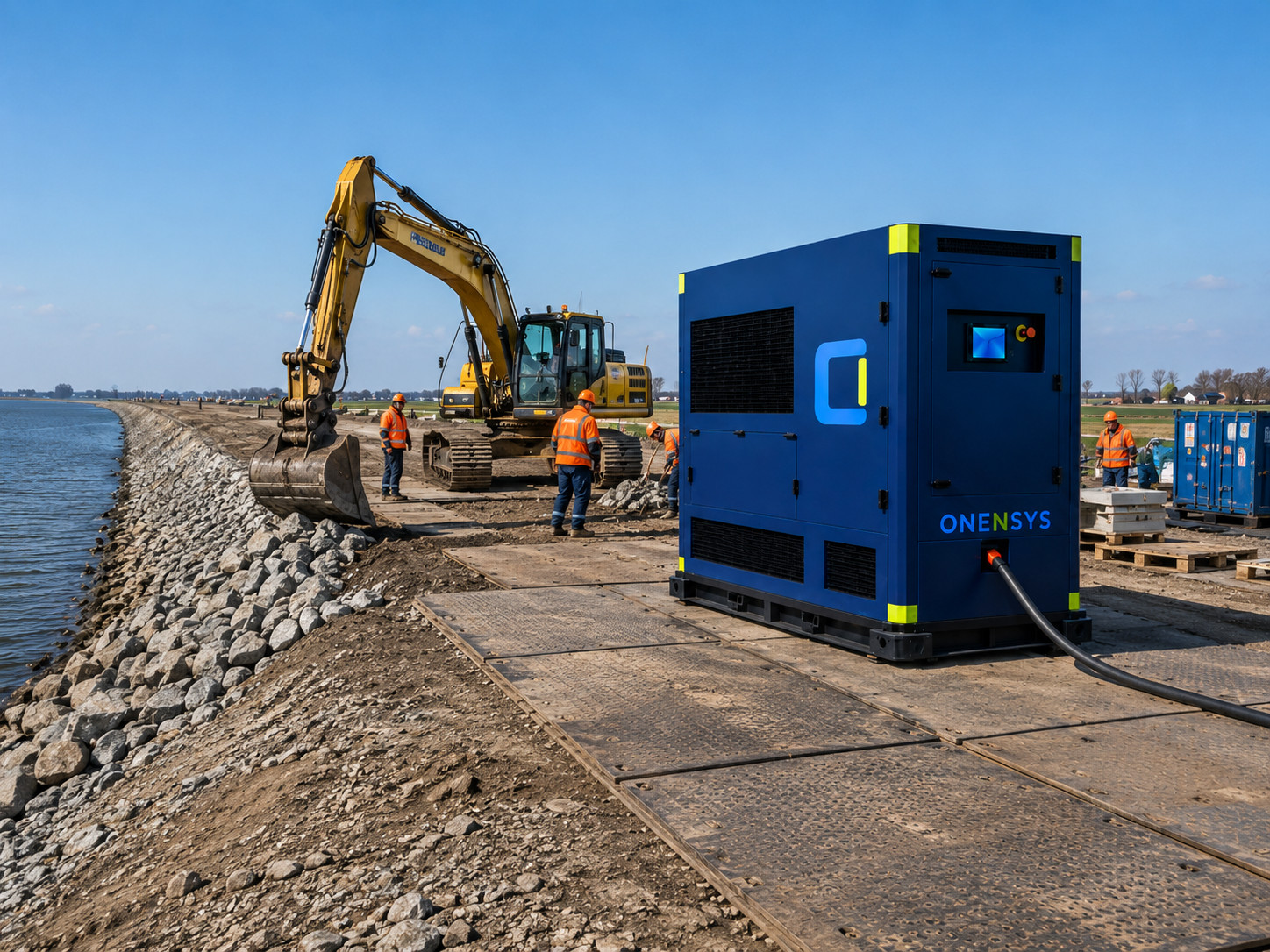
- dike reinforcement projects and other civil works in sensitive areas.
For these types of projects, the availability of reliable zero-emission power on site is becoming increasingly important. Electric excavators, wheel loaders, cranes, pumps, lighting, charging systems and other equipment all require a dependable energy supply, often in locations where the grid connection is limited, delayed or unavailable.
That is exactly where a hydrogen generator such as the H2-Powergen can play an important role.
SPUK SEB: compensation for the additional cost of zero-emission construction
The SPUK SEB subsidy is designed to help compensate public clients for the additional costs of using zero-emission construction equipment in tendered construction projects.
In practice, this can make it financially attractive to replace a diesel generator with a zero-emission hydrogen generator. For a hydrogen generator in the H2-Powergen power class, the SPUK SEB compensation is €270 per deployment day, which can amount to €1,890 per week when the generator is deployed seven days per week.
This contribution helps bridge the cost difference between conventional diesel power and zero-emission power on site. It can also be used to compensate additional costs related to the deployment of electric construction machines, such as electric excavators, wheel loaders or other zero-emission equipment used during the project.
Who can apply for SPUK SEB?
The SPUK SEB is mainly relevant for public contracting authorities. In 2026, the scheme is aimed at municipalities, provinces and water authorities that have signed the SEB Convenant within the required timeframe.
Other public clients, such as Rijkswaterstaat, play a key role in accelerating zero-emission construction through procurement requirements and SEB aligned tenders. For contractors, this means that zero-emission equipment and zero-emission site power are becoming increasingly relevant in public infrastructure tenders.
The practical takeaway is simple: contractors and public clients should discuss zero-emission power supply early in the tender or project preparation phase. The earlier the deployment of electric equipment and hydrogen generators is included in the equipment plan, the easier it becomes to use available subsidy instruments and avoid delays later in the project.
Why hydrogen generators are relevant for SEB projects
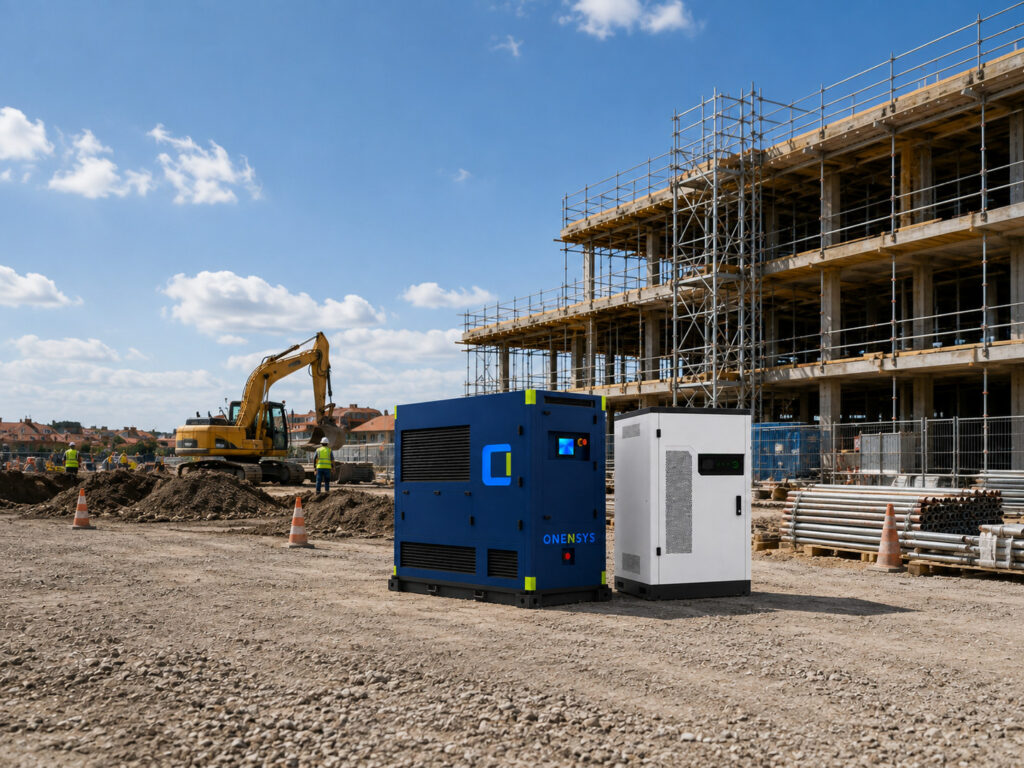
Many construction sites need temporary power before a grid connection is available, or in places where the available grid capacity is not sufficient for heavy electric equipment.
The H2-Powergen provides mobile zero-emission electricity on site, using hydrogen instead of diesel. This makes it suitable for construction sites where contractors need reliable off-grid power for:
- charging electric construction machines;
- powering site equipment and temporary installations;
- supporting worksites with limited grid capacity;
- reducing emissions near Natura 2000 areas or other sensitive environments;
- meeting zero-emission requirements in public tenders;
- gaining practical experience with zero-emission generators before stricter requirements take effect.
By using hydrogen-based power generation, contractors can continue working off-grid while avoiding harmful emissions from temporary power supply.
Zero-emission generators: valuable today, required from 2028
The transition to zero-emission construction is already underway. Public clients increasingly value low-emission and zero-emission solutions in tenders, project execution and sustainability requirements. For contractors, using zero-emission power on site can therefore already strengthen a tender, support compliance with project-specific emission targets and contribute to a cleaner and quieter construction site.
A key milestone in the SEB transition is January 1st 2028. From that date, the SEB roadmap sets a 100% zero-emission requirement for stationary equipment such as generators below 560 kW1. For projects procured under SEB requirements, this means that conventional diesel or gas generators will no longer be acceptable. Investing in diesel or gas generator capacity is therefore increasingly a short-term solution.
For contractors and public clients, it is valuable to start planning zero-emission power supply early in the project. Securing a grid connection with sufficient capacity can take considerable time and, in many cases, may take up to a year after application. This can directly affect project planning, especially when electric construction equipment needs to be charged on site.
A hydrogen generator offers a fast and flexible alternative. Just like a diesel generator, the H2-Powergen can be deployed where and when temporary power is needed, but without local emissions. This makes it a practical solution for projects that want to build zero-emission today, need reliable power before a grid connection is available, or operate in locations where grid capacity is limited.
By gaining experience with hydrogen generators now, contractors and public clients can already benefit from zero-emission construction in projects today and will be ready for the SEB transition into 2028.
Make zero-emission construction practical
Zero-emission construction works when sustainability, reliability and project economics come together. The combination of SEB requirements, SPUK SEB compensation and mobile hydrogen power from the H2-Powergen can make that possible.
The H2-Powergen offers contractors and public clients a practical route towards cleaner construction sites, without depending solely on the availability of a grid connection.
Replace diesel power or battery swapping in your next project with zero-emission hydrogen power and build experience.