What grid congestion really means
The electricity grid was built for a world that produced power in a few large plants and consumed it fairly predictably. That world is changing on both sides at once.
On the supply side, thousands of solar and wind installations now feed power into a grid that was never designed to receive it locally. On the demand side, electrification is adding load fast: electric construction equipment, heat pumps, EV charging depots and industrial processes that used to run on gas or diesel.
The result is congestion — moments when more electricity wants to flow through a part of the grid than the cables and transformers can safely carry. When that happens, the grid operator cannot simply connect every new request. New connections and capacity upgrades are queued until the network can be reinforced.
Congestion is not a temporary glitch. It is a structural gap between how fast demand is growing and how fast physical infrastructure can be built.
Why reinforcement takes so long
Adding capacity is not a matter of flipping a switch. It means new cables, larger transformers and sometimes entirely new substations. Each step involves planning, permits, land, materials and skilled installation crews — all of which are in short supply at the same time.
For your project, this shows up as a simple but painful reality: securing a grid connection with sufficient capacity can take up to a year after application, and sometimes longer. If your planning assumes power will be available when you break ground, congestion can quietly move your entire timeline.
The three ways projects usually respond
When a grid connection is delayed, insufficient or simply unavailable, projects tend to choose one of three routes.
Wait for the grid. Sometimes unavoidable, but every month of delay carries cost — idle equipment, extended rentals and postponed revenue.
Fall back on diesel. Fast to arrange, but increasingly restricted. Emission requirements, noise limits and SEB procurement rules are steadily reducing the role of conventional generators.
Use onsite power. Generate the capacity you need where you need it, independent of the grid — whether the challenge is temporary congestion, no available connection or a project that moves from location to location.
Onsite power where the grid cannot deliver
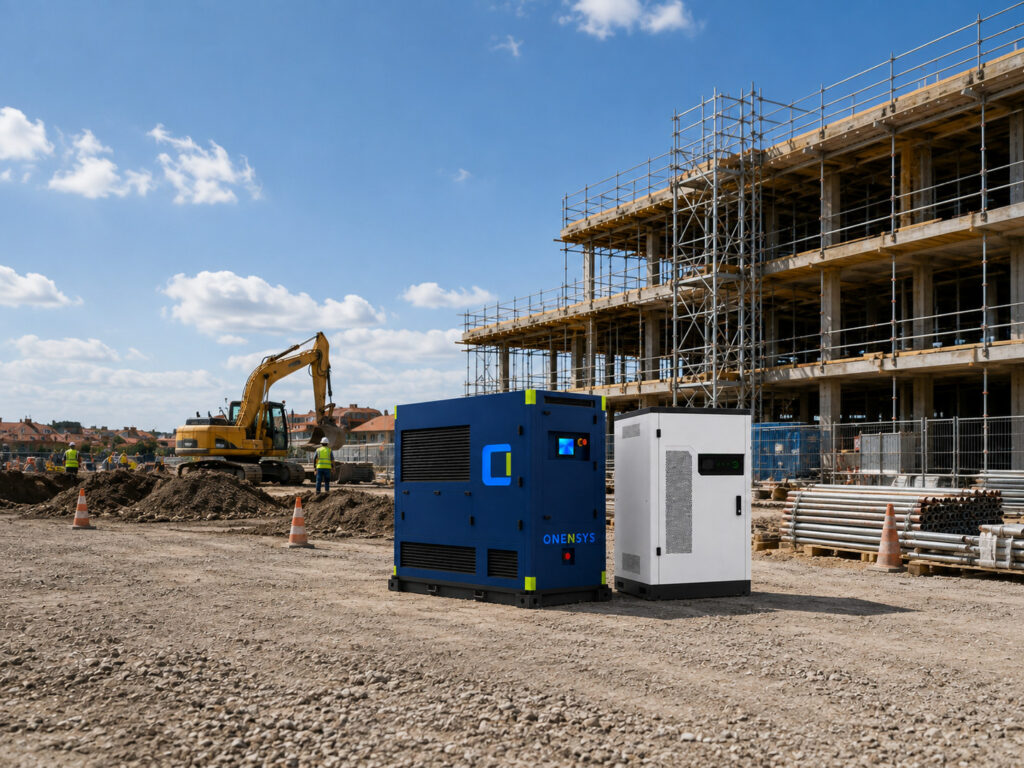
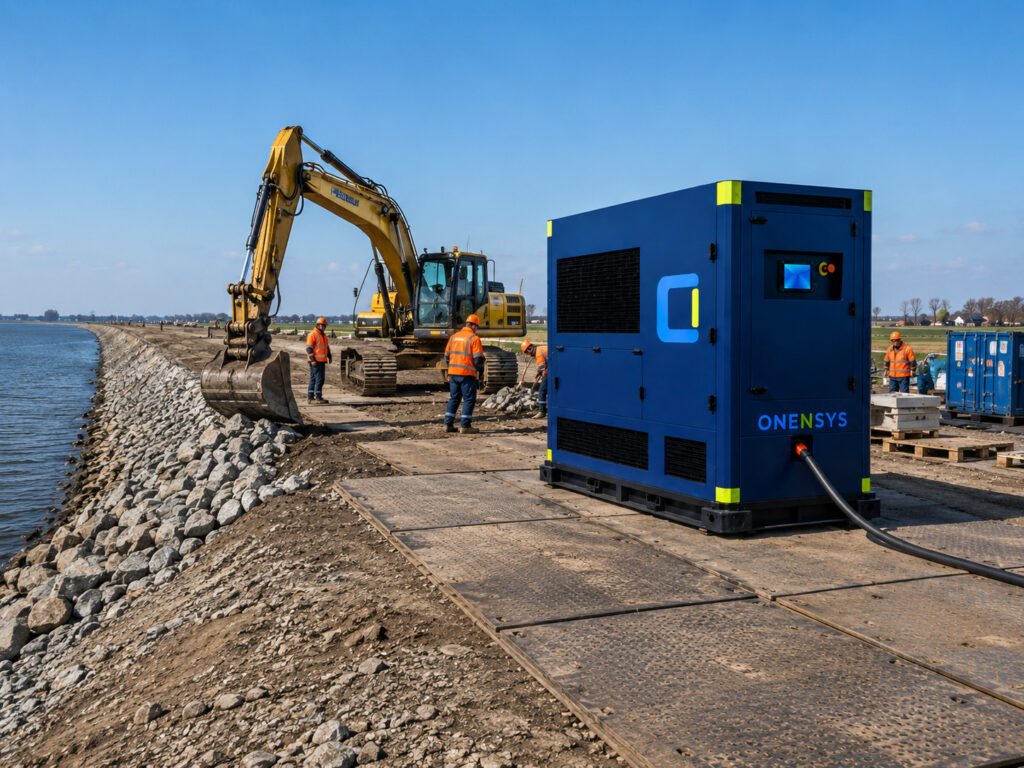
This is where a hydrogen generator such as the H2-Powergen fits. It delivers reliable, zero-emission electricity directly on site, without depending on a permanent grid connection.
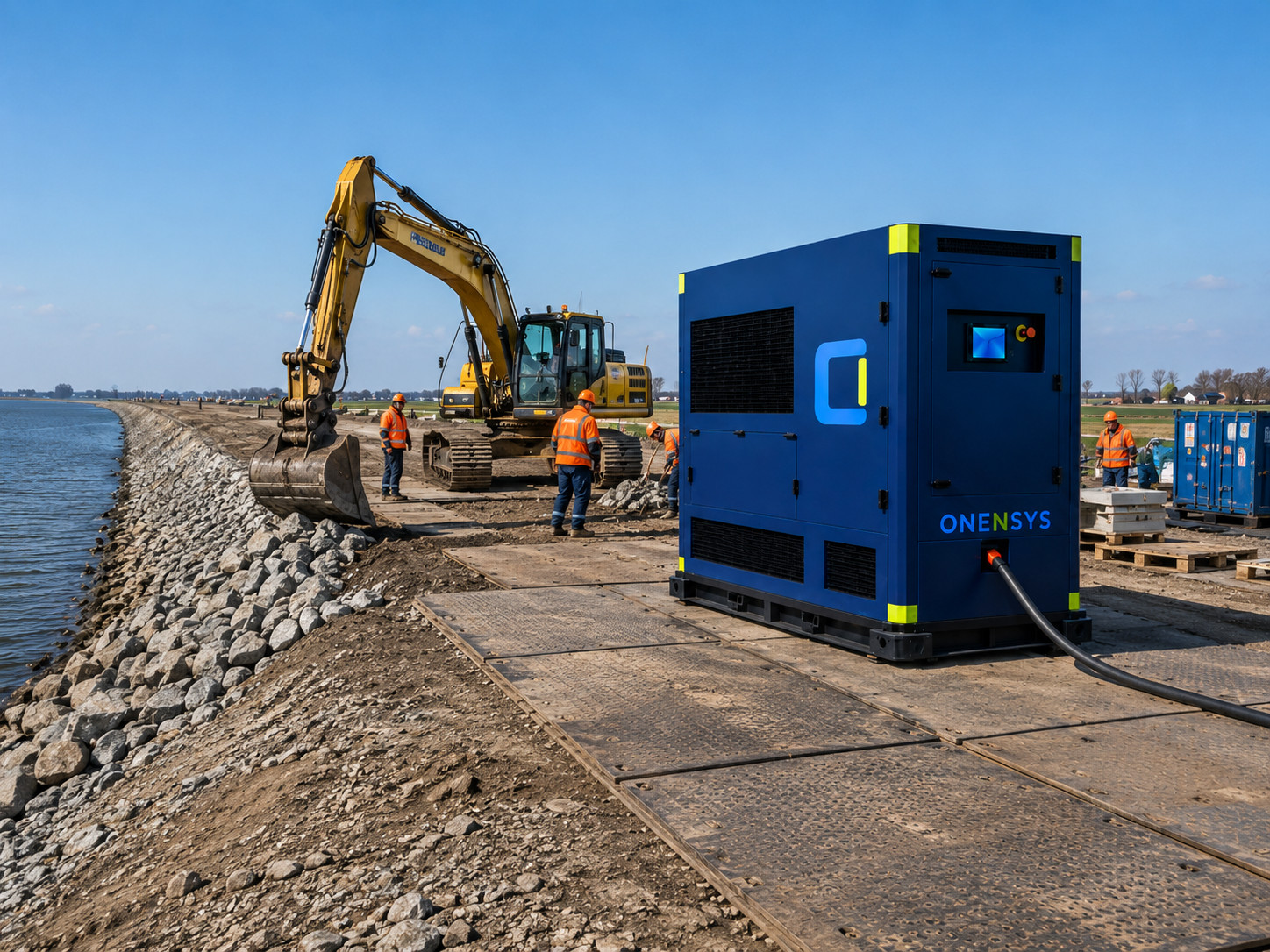
For some projects, onsite power acts as a bridge while additional grid capacity is being developed. For others, it is the practical power solution for the entire project — for example at temporary worksites, remote locations or infrastructure projects that move along a route, such as dike reinforcement, road works or linear civil engineering projects.
That changes the equation in three ways:
- You can start and keep moving. Power is available where the work takes place, without waiting for a grid connection.
- You stay compliant. Zero local emissions make the system suitable for projects with strict emission and noise requirements.
- You keep flexibility. The system is mobile and modular, so capacity can move and scale with the project.
The H2-Powergen is therefore not only a temporary answer to grid congestion. It is an onsite power solution for projects where the grid is delayed, insufficient, unavailable or simply not practical.
Plan your power early
The most useful thing you can do is treat power as an early planning decision, not a late one. Map your power demand, project locations, grid availability and emission requirements before execution starts.
That makes it easier to determine whether the grid can support your project — or whether mobile onsite power is the more practical solution from the outset.