
Practical and safe hydrogen power onsite
The H2-Powergen is designed to make zero-emission onsite power practical.
It combines reliable onsite power with a compact setup, controlled hydrogen supply and clear safety procedures. This makes it a strong alternative to diesel generators for projects that want to reduce emissions without adding unnecessary complexity to daily operations.
Permit-free deployment for typical construction sites
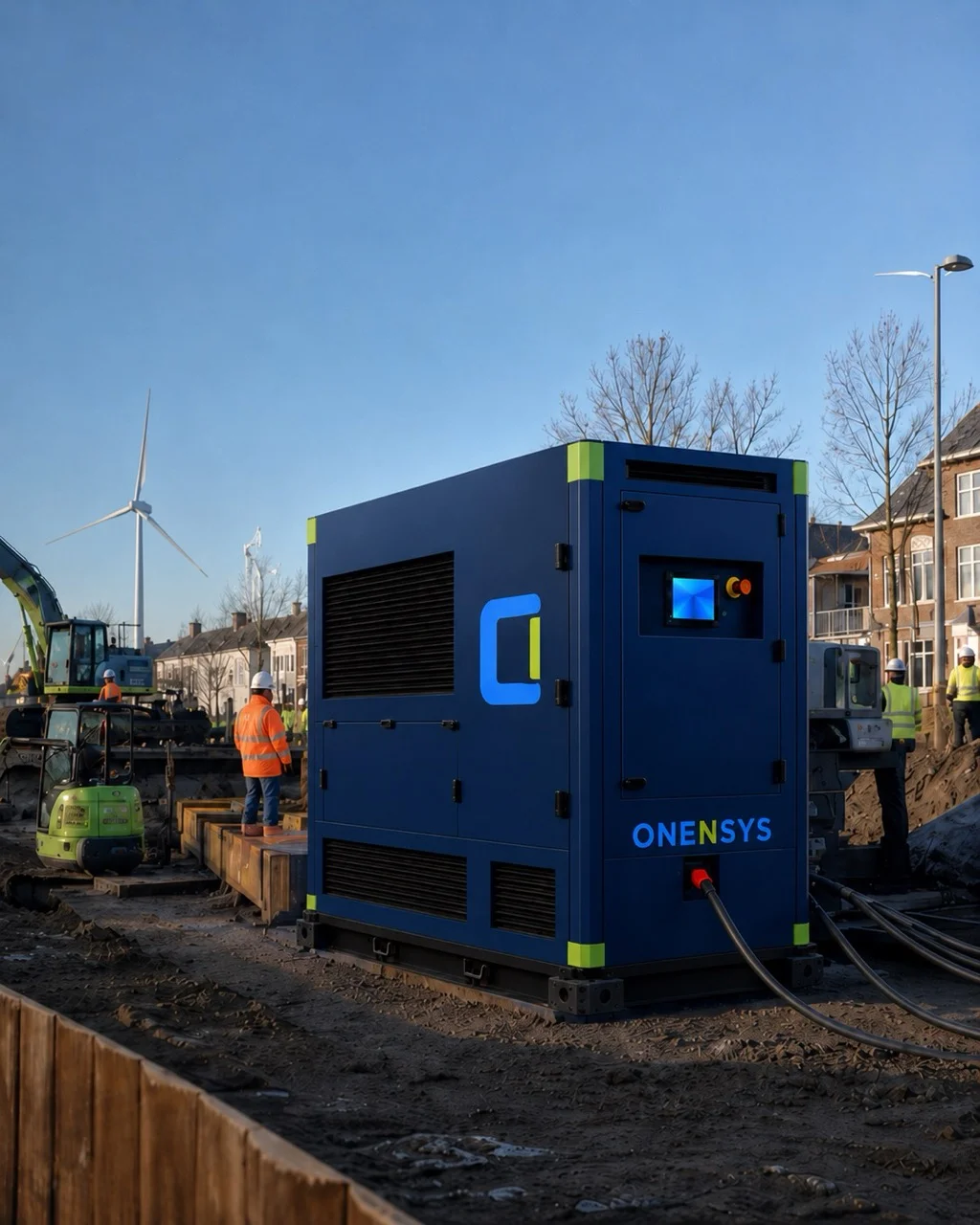
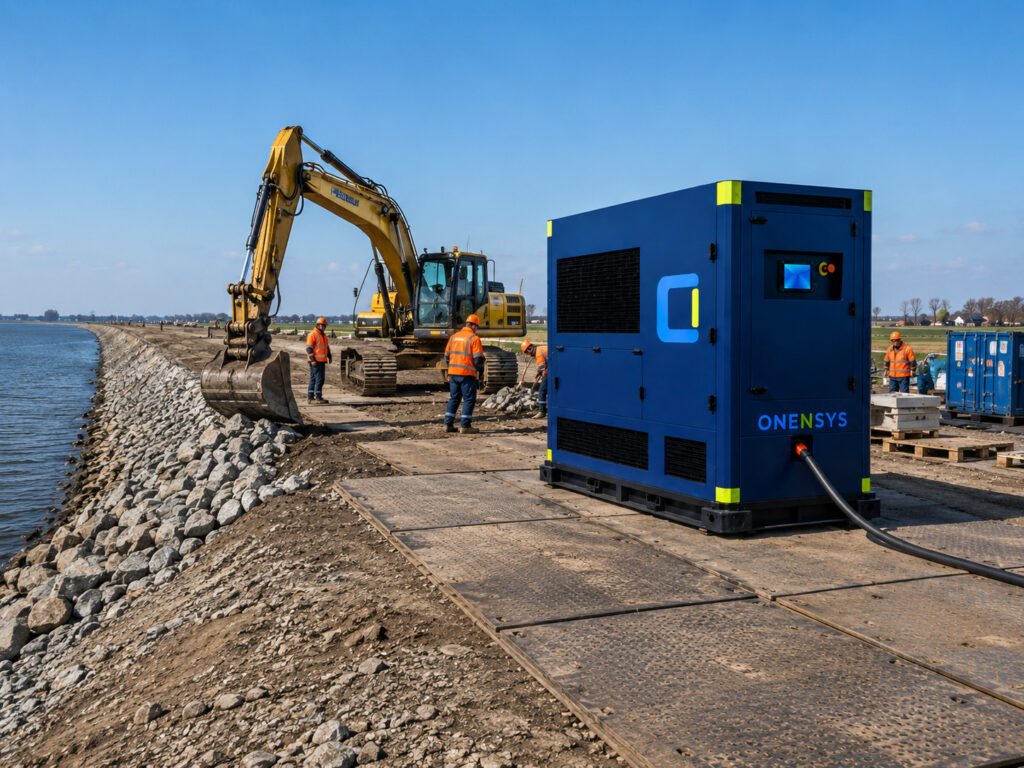
For typical construction site applications, the use of H2-Powergens can be organised without an environmental permit, as long as the hydrogen storage remains below the applicable threshold of 5.000 kg. In practice, onsite power projects stay well below this level.
Instead of a permit procedure, a notification is generally required four weeks in advance. This is the same as what is required to use temporary power with diesel generators today.
This makes the H2-Powergen a practical solution for contractors who need clean onsite power without adding unnecessary permitting complexity and lengthy procedures.
Compact onsite setup
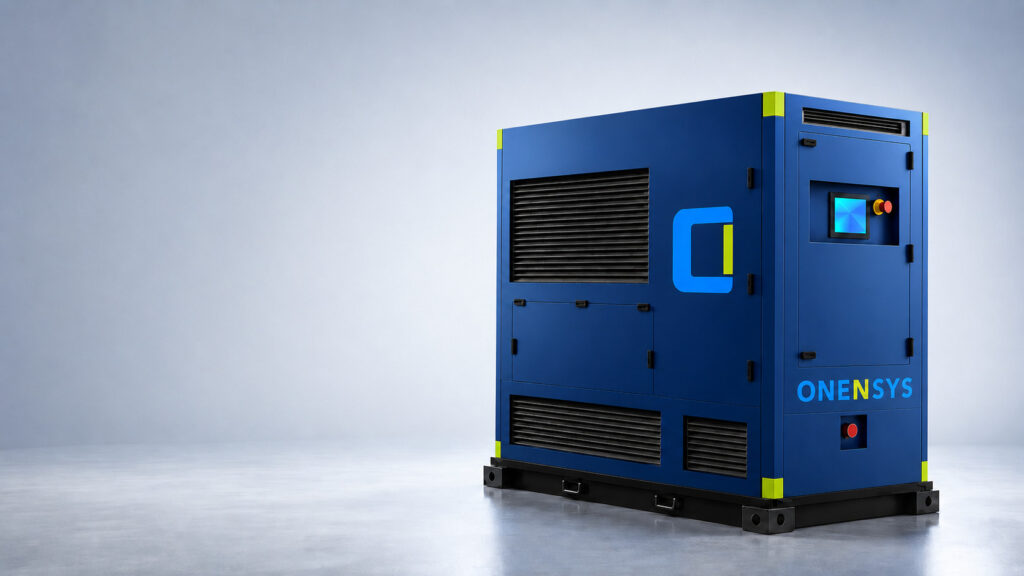
The H2-Powergen requires only a limited footprint onsite.
One unit can be placed close to the energy demand, such as electric construction equipment, temporary facilities or charging points.
For higher power or energy demand, up to three H2-Powergens can be connected in parallel. This makes it possible to increase available capacity while keeping the onsite setup compact and manageable. The hydrogen supply is connected to a small pressure reduction unit, which safely reduces the hydrogen pressure before it is supplied to the H2-Powergen.
The hydrogen supply, pressure reduction unit and H2-Powergen are placed inside a secured area with mobile construction fencing to prevent unauthorised access and support safe operation onsite. As an additional precaution, the installation is placed on a non-combustible surface, such as concrete, bricks or steel plates.
Safe operation by design
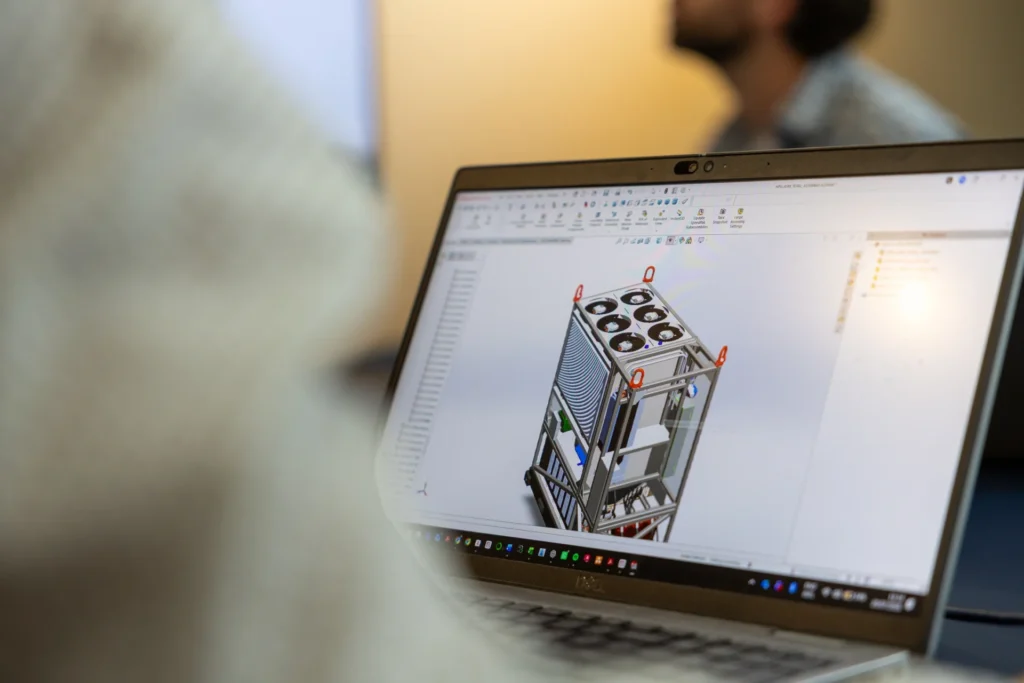
The H2-Powergen is designed for safe and practical use onsite.
Safety is built into the complete setup: controlled hydrogen supply, limited flow through the connection hoses, continuous monitoring and automatic shut-off if hydrogen release is detected. This limits the amount of hydrogen that can be released and helps maintain a safe working environment onsite.
We take care of correct placement, setup and commissioning. The system can also be monitored remotely during operation. The H2-Powergen is designed for simple and safe to use, and we can provide training so onsite personnel know how to operate the system correctly.
Before deployment, the system is assessed and validated with support from experienced safety and certification partners such as KIWA.
Hydrogen storage solutions such as containers and bundles that supply hydrogen to the H2-Powergen are also rigorously tested for safety by notified bodies such as KIWA following international regulations such as Transportable Pressure Equipment Directive (TPED) and Transport of Dangerous Goods by Road (ADR) regulations. During these certification tests KIWA will perform impact and fire testing of hydrogen tanks to test for their behavior under accident conditions, for example with:
- Bonfire tests: the tank is exposed for 12 minutes to flames of at least 800°C. It must not explode and must safely vent through its built-in safety valves.
- Gunfire tests: the tank is shot with a firearm. Again, no explosion is permitted and pressure must be released in a controlled way.
These rigorous testing procedures should comfort you that safety is of paramount importance and can be counted on when using our certified equipment.
Want to know what is required to power your site with the H2-Powergen?
Every project is different. We help you assess the required setup, available space, notification requirements, hydrogen storage, safety distances and daily operation. Whether you need temporary power for charging electric construction equipment or powering onsite facilities, we can help determine the right setup for your project.