
Charging Electric Construction Equipment Without Grid Power
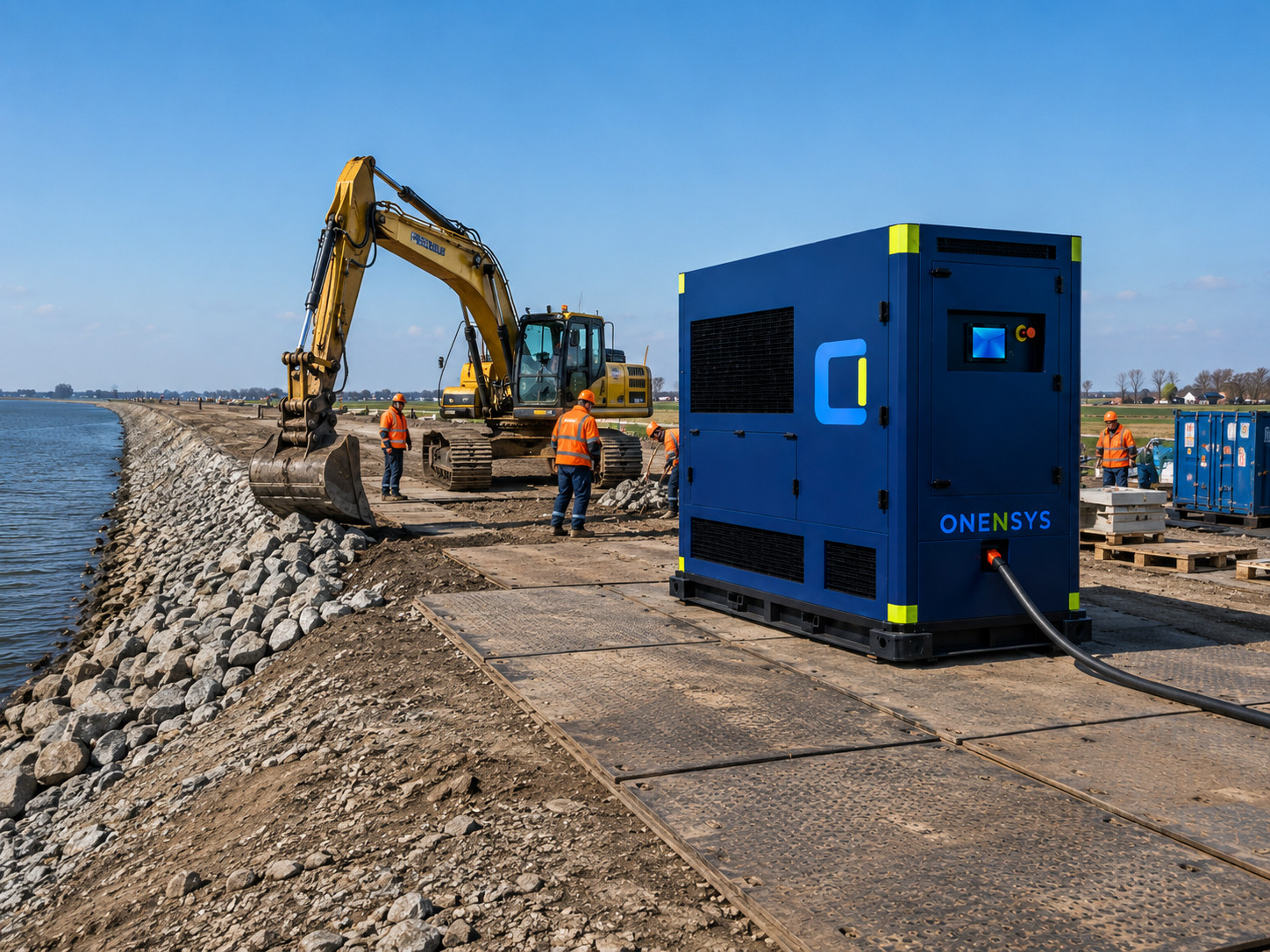
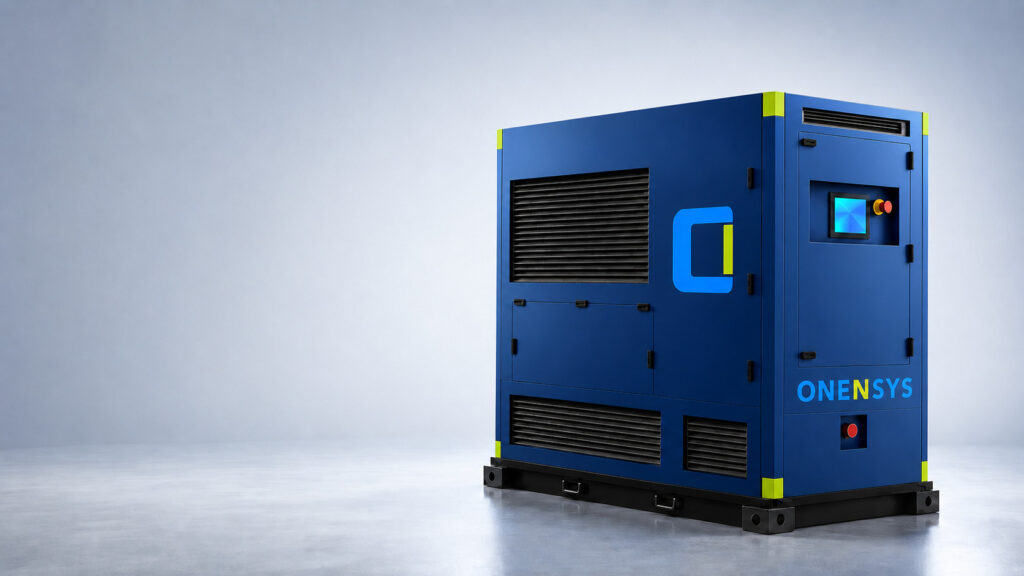
Charging electric construction equipment like excavators on site is often a challenge in zero emission civil engineering, infrastructure and GWW projects, especially where grid power is insufficient, unavailable or delayed. The H2-Powergen is a mobile hydrogen generator that delivers zero emission charging power directly on your construction site, so your electric fleet keeps working without grid power.
We’ll get in touch to understand your needs and assess whether one of our solutions could be the right fit.
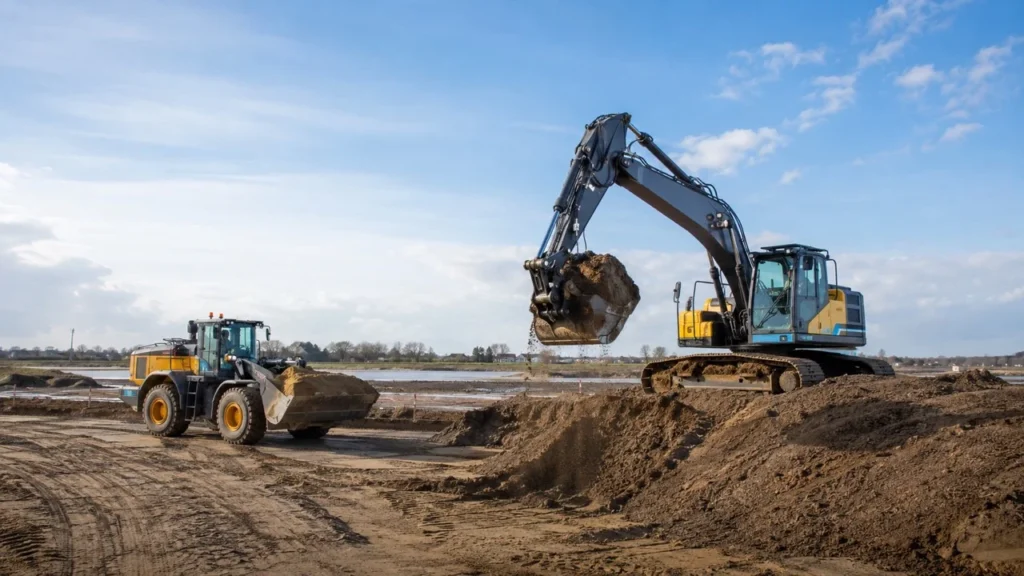
Electric construction machines
| Machine | Type | Battery |
|---|---|---|
| Volvo EC230 Electric | 23 t crawler excavator | 450 kWh |
| SANY SY215E | 23 t crawler excavator | 422 kWh |
| Liebherr R 922 BE | 25 t crawler excavator | 390 kWh |
| Liebherr A 916 BE | 17 t wheeled excavator | 260–325 kWh |
| Develon DX165W / ETEC E160W | 17 t wheeled excavator | 380 kWh |
| ETEC 250LC | 25–30 t crawler excavator | 520–580 kWh |
| Volvo L120 Electric | 20 t wheel loader | 282 kWh |
| Volvo A30 Electric | 29 t articulated hauler | 450 kWh |
Overnight and Fast Charging for Electric Excavators
Overnight charging: make the most of downtime. Electric excavators and other construction equipment are often idle for 10 to 15 hours overnight between working days. During this time, the H2-Powergen can supply electricity to recharge them, including on sites with limited or no grid power. For example, at 75 kW for 10 hours, one H2-Powergen can supply up to 750 kWh of electricity. Depending on battery size, remaining charge and charging time, this can be enough to recharge one or two large electric excavators, or several smaller machines.
The right charger depends on how much energy each machine needs and how much time is available. For lighter equipment, an 11 kW or 22 kW onboard charger may provide enough energy overnight, while a large electric excavator may require a 40 kW DC charger.
Fast charging at lunch: add a battery. Some projects and machines with smaller battery packs require a fast charge during a break to keep equipment operating throughout the working day. Fast charging can require 150 kW or more, exceeding the output of a single H2-Powergen. In these situations, a hybrid generator can be a smart choice: the H2-Powergen charges a battery system between charging sessions, and together they deliver higher peak power when needed. This provides fast charging without sizing the generator around a short peak demand.
Charging a specific machine? Share its model, battery size and working hours with us. We’ll help you determine whether overnight charging is sufficient or whether a hybrid setup would better suit your project.
Which electric construction equipment can we help you charge?
From electric excavators to wheel loaders and other electric construction equipment, ONENSYS helps you charge the equipment you need to keep your project moving.
The H2-Powergen supplies 400 V three phase AC power through a standard 125 A industrial connection. Depending on your equipment, it can power an AC charger, such as a 22 kW Type 2 charger, or a mobile DC charger for faster charging via CCS2.
This makes it suitable for charging a wide range of electric construction equipment on civil engineering construction sites, including:
Crawler and wheeled excavators
Wheel loaders and compact loaders
Articulated haulers and dumpers
Mobile cranes and telehandlers
Excavators working from pontoons on waterways and dike projects
Electric trucks used for site logistics
The H2-Powergen can also supply power to pumps, site facilities and lighting. The right power supply for your project depends on your equipment, its charging connection and your power needs.

Zero Emission Charging for Civil Engineering, Infrastructure and GWW Projects
Zero emission charging matters most where emission limits are strictest and grid power is hardest to get:
- road construction and maintenance
- dike reinforcement and water management works
- quay walls, bridges and viaducts
- rail and public transport infrastructure
- site preparation and earthmoving
- demolition and recycling work
- projects in or near Natura 2000 areas
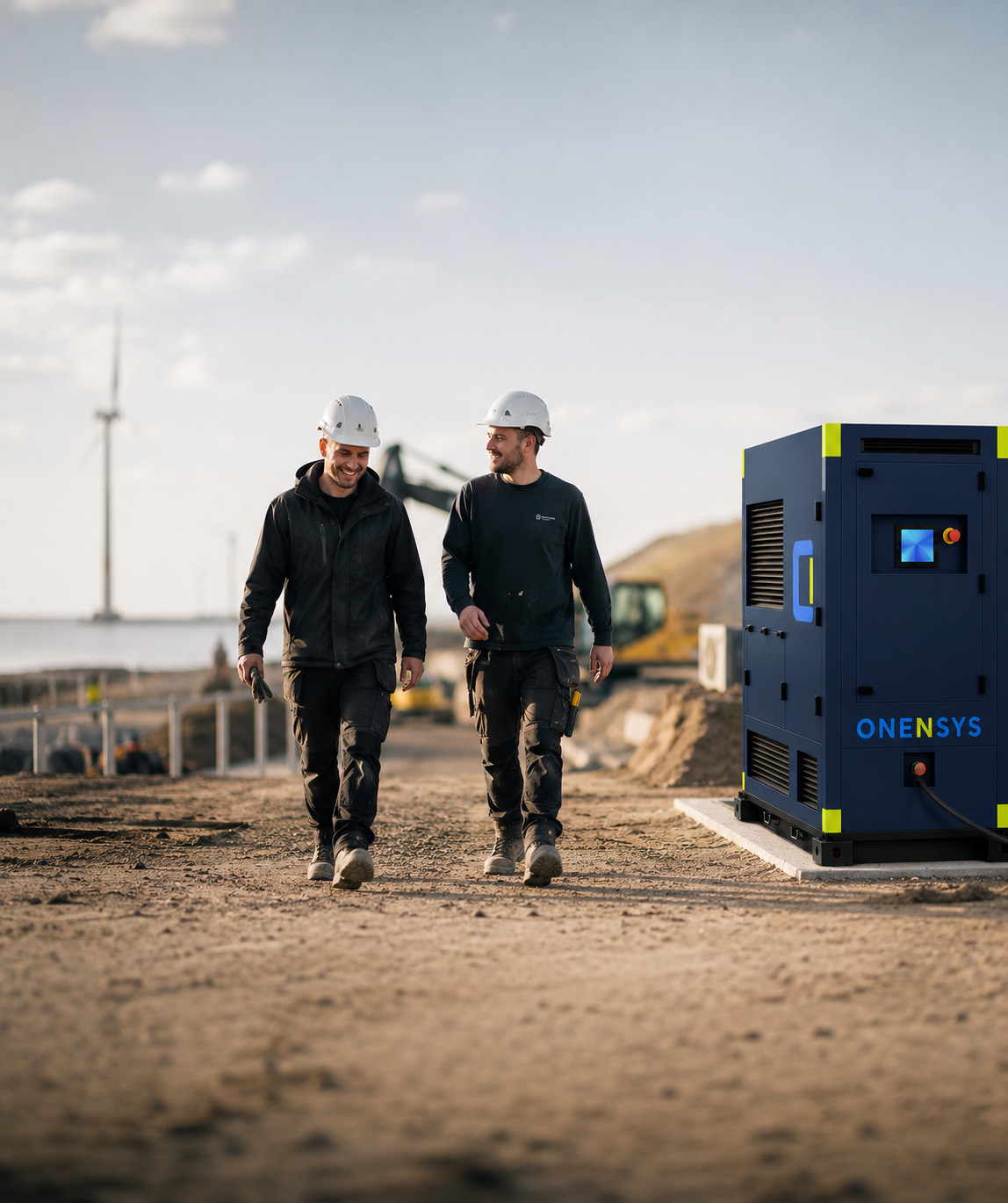
A hydrogen power generator like the H2-Powergen moves with your project. It requires limited space, operates quietly compared with a diesel generator, and for typical construction sites it can be deployed without an environmental permit.
Key benefits
- 86 kVA per unit (100 kVA peak), 400 V AC, 3 × 125 A
- Up to three units combined: 260 kVA (300 kVA peak) and up to 5,000 kWh per day
- Zero NOx, CO₂ and particulate matter emissions on site
- No environmental permit required for typical construction sites
- Off-grid or grid-connected operation, grid code compliant
- Operating temperature −25 to 45 °C

Lower costs with the SPUK SEB subsidy
Public clients that signed the SEB Convenant can receive SPUK SEB compensation for zero emission equipment in their projects. For a hydrogen generator in the H2-Powergen power class this is €270 per deployment day, up to €1890 per week. The scheme can also cover additional costs of electric construction machines themselves.
From 1 January 2028, the SEB roadmap requires stationary equipment such as generators below 560 kW to be fully zero emission in SEB projects. Starting now means you are ready before the requirement applies.
Powering your transition to electric construction
At ONENSYS, we help contractors charge electric excavators and other construction equipment, even in locations with limited or no grid capacity. We combine zero emission hydrogen power with battery storage where needed to power your equipment, charging schedule and site conditions.
From configuring your onsite power supply to coordinating deployment, operational support and hydrogen supply, our team works with you to keep your equipment charged and your project moving.

Interested in Charging Electric Equipment?
Contact us to discuss your project, power requirements and site conditions. Our team will help you find a suitable power supply to charge your electric construction equipment on site.

Frequently asked questions
The grid connection for my project is delayed — can ONENSYS provide power in the meantime?
Yes — this is one of the most common situations we solve. We assess your power demand and configure an onsite energy system that delivers the capacity you need while the grid connection is unavailable, insufficient or not yet ready, so your project can start on time.
Do I need a fixed grid connection to use an ONENSYS system?
No. Our systems operate off-grid and grid-connected. For temporary and mobile projects we provide reliable power without depending on fixed infrastructure, and the setup can move with your project.
My site must meet zero-emission or Natura 2000 requirements. Is that possible without stopping work?
Yes. We configure zero-emission onsite power that supports compliance with Natura 2000 restrictions, SEB requirements and procurement criteria — without bringing your operation to a halt. Where conventional generators are no longer allowed, this is exactly the gap we fill.
I'm not sure which challenge applies to my project. How do I find out?
Many projects face several overlapping constraints: limited grid capacity, emission requirements and tight timelines. Contact us to assess your onsite power challenge. We evaluate your energy and power demand, grid situation and emission requirements, then explore the right power setup for your site.
Can ONENSYS guarantee system performance?
Depending on the project and operating requirements, ONENSYS can agree contracted performance levels covering areas such as power availability, monitoring, maintenance and service response. The exact commitments and conditions are defined in the project agreement.
How can I charge an electric excavator without grid power?
An electric excavator can be charged using a compatible AC or DC charging system with power supplied by an onsite mobile power generator. The H2-Powergen provides three phase AC power that can provide AC charging directly or DC fast charging via a mobile DC charger compatible with the machine’s charging requirements. Click here to learn more about charging electric construction equipment.
Can I charge multiple electric construction machines at the same time?
Yes. Multiple machines can be charged simultaneously as long as the total charging demand stays within the available power capacity. ONENSYS assesses the battery capacities, charging windows and power requirements to determine a suitable system configuration for your charging needs. Contact us and share your energy requirements so we can help you find a suitable power supply.